


We are so honored and grateful for SCA's recognition of our RENACER Coffee School with its 2023 Sustainable Project Award!

This post provides the background, purpose and results of the RENACER Coffee School since it was launched in early 2019.
Why did we launch RENACER? Coffee farm renovation is an expensive but necessary investment for every farm. The longer a farmer delays renovation, the more expensive it becomes. A cascade of shocks over the past fifteen years caused many farmers in El Salvador (and elsewhere) to postpone coffee farm renovation, creating a crisis: in 2021 El Salvador exported half the coffee it exported in 2012. Now there is an urgent need to renovate farms, but advice for farmers has been confusing and contradictory.
Cost-Effective Farm Renovation: With this backdrop, five years ago CRS convened a group of farmers (large and small) and NGOs to launch RENACER (rebirth, in Spanish), a coffee training school to train farmers in farm renovation practices that are effective and profitable. Since 2019, the RENACER school has trained hundreds of farmers (large and small) how to turn renovate their farms, generating profits within about three years. The RENACER model includes a few key practices, focused primarily on soil restoration and soil fertility management, plus proper pruning and pest management, post-harvest practices and a focus on quality from seed to bean. RENACER partners also support farmers to connect with a network of millers, exporters, importers and roasters who pay premium prices for high quality coffee producers, creating a virtuous cycle that benefits producers and buyers.
RENACER is a coffee school in western El Salvador that trains farmers and farm managers on cost-effective practices for coffee farm renovation, tree management, harvesting, and post-harvest practices. RENACER students include small-scale farmers and farm managers from cooperatives as well as larger farms.
RENACER and Blue Harvest: RENACER plugs directly into our Blue Harvest partnership to support farmers to market their coffee through various channels, including facilitating direct marketing (roasters to farmers) and an innovative export-service-provider model, where RENACER partners help facilitates contracts between farmers, millers/exporters, and importers to ensure farmers receive an equitable share of the value of coffee. RENACER has a coffee cupping lab, where farmers can have their coffees evaluated by certified cuppers and where farmers can learn to understand how to increase the value of their coffee.

Nearly all technical staff (12 staff) employed by RENACER are young people (younger than 25) and increasingly students that attend RENACER include youth and young professionals.
RENACER is supported primarily by our RAICES program (www.raices.sv), which is funded by the Howard G. Buffett Foundation (HGBF).
RESULTS in TRAINING: To date RENACER has trained 386 small farmers and 120 farm managers (of cooperatives or large farms). An additional 35 farm managers started the 2023 course in January. Nearly 190 youth have participated in RENACER short-courses in cupping and barismo. Many of these students are working for farms, NGOs, mills, coffee shops, and a few have created their own businesses.
RESULTS on the GROUND: More than 500 hectares of coffee farms have been renovated as a result of technical assistance and training. Average productivity has increased from a low of 5 quintals per manzana to a minimum of 15 QQ/mz.
RESULTS in MARKETING: RENACER farmers have increased average cupping scores from high 70s to low to mid-80s, with micro-lots scoring in the high 80s.
Small-holder farmers affiliated with RENACER affiliated farmers have generated more than $2 million since 2020, significantly increasing farmer income.
Unlocking Value Through Regenerative Agriculture
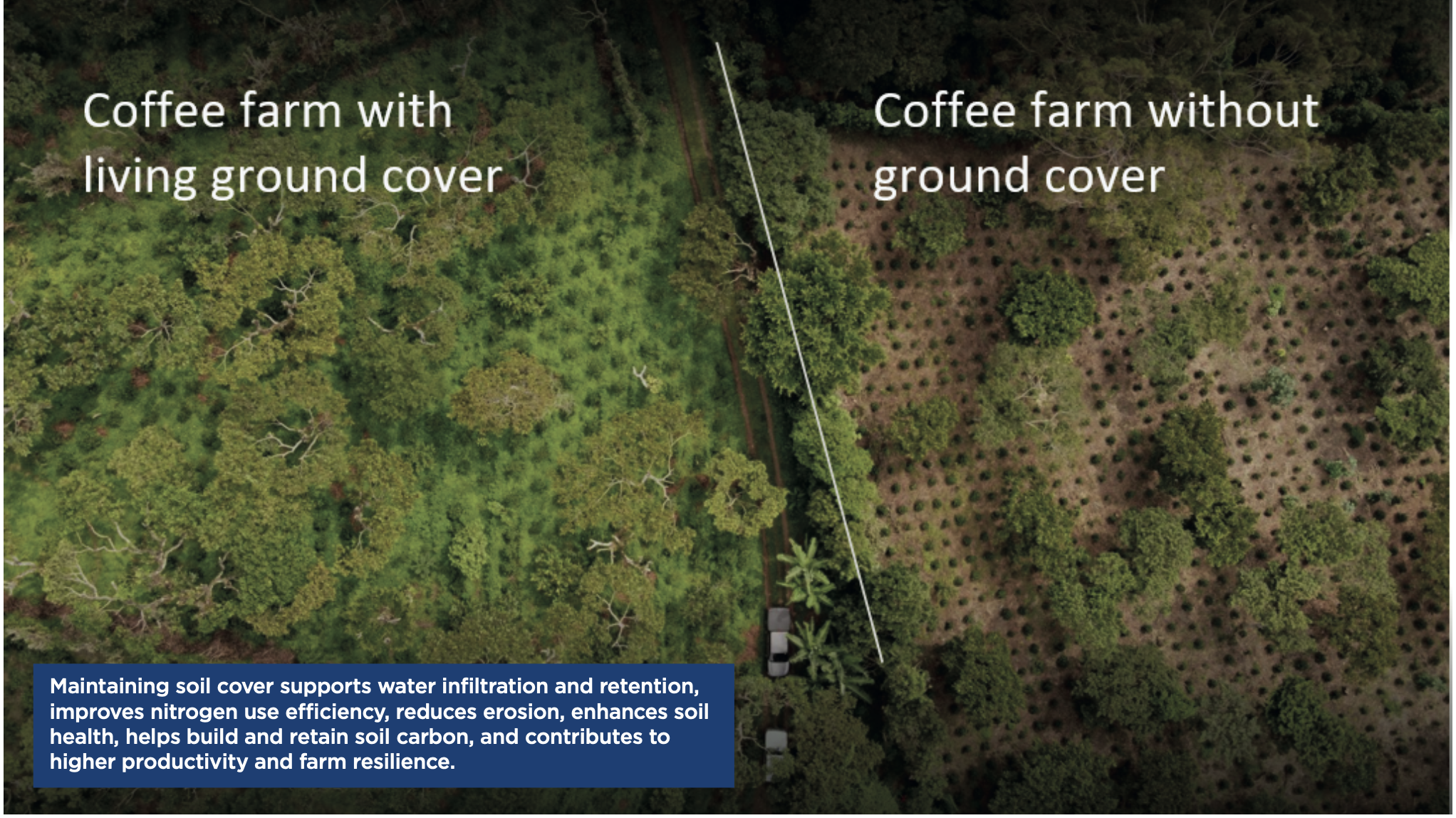
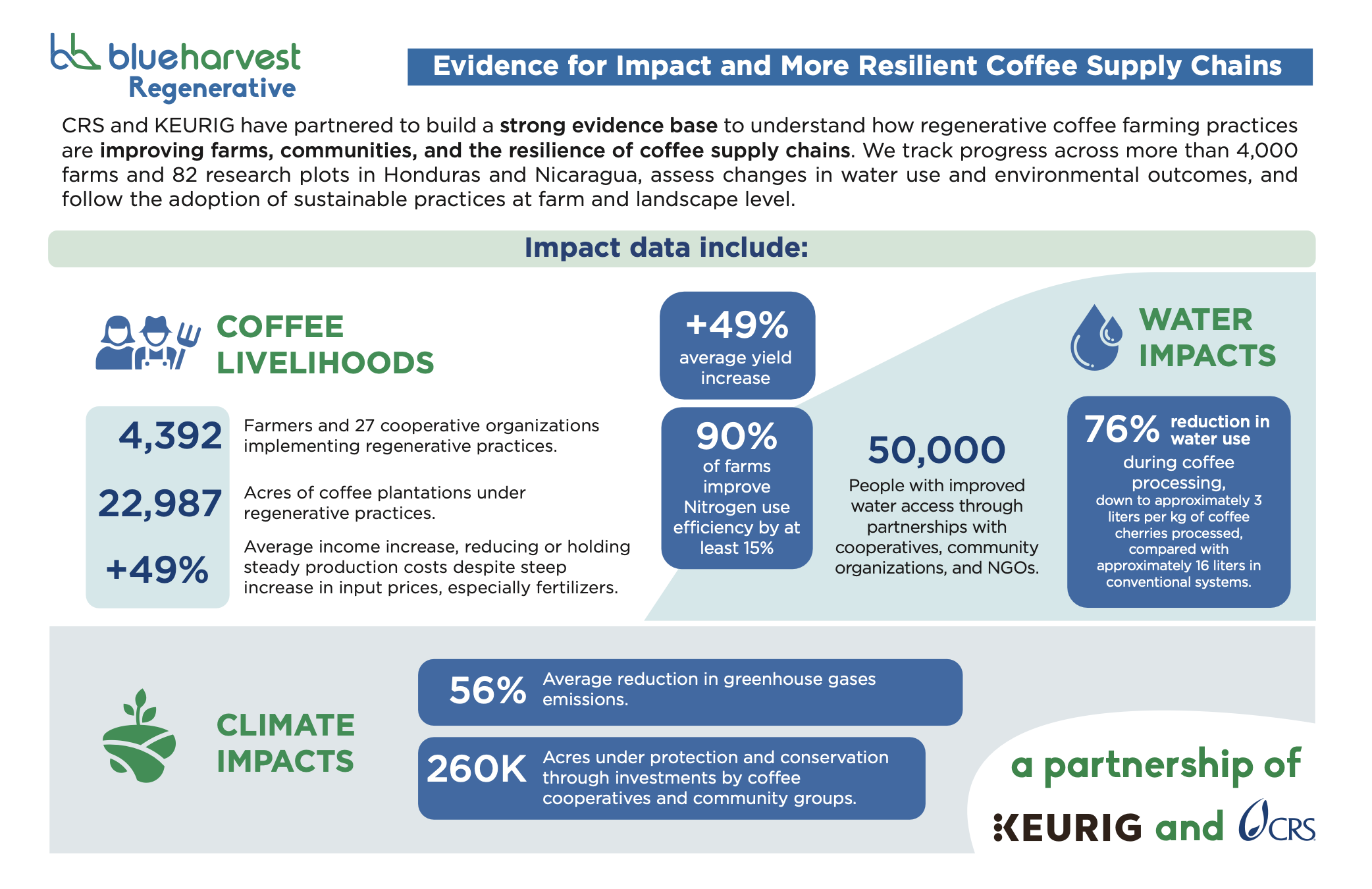
One of the most important questions facing the coffee sector is whether regenerative agriculture can deliver measurable economic value. The evidence emerging from Blue Harvest suggests it can. Participating farms reported an average yield increase of 49%, income gains ranging from 43% to 52%, and significant improvements in nitrogen use efficiency. These results suggest that healthier soils can support stronger farm economics while reducing reliance on costly external inputs, creating value for producers, cooperatives and supply chain partners alike.
Water Security Is Coffee Security
Water is one of the most critical resources underpinning the future of coffee. Coffee processing water use has been reduced by 76%, saving more than 40 million liters of water annually. At the same time, partnerships among cooperatives, communities, and local organizations have helped improve water access for 50,000 people. These results show that investments in water stewardship can generate benefits that extend beyond the farm, supporting both community well-being and long-term supply chain resilience.
A Climate Solution Rooted in Working Landscapes
Using the Cool Farm Tool, Blue Harvest Regenerative has documented greenhouse gas emission reductions of more than 50% through improved nutrient management, agroforestry systems, enhanced soil cover, and better management of coffee processing byproducts and wastewater. At the same time, coffee cooperatives and community groups are helping protect and conserve more than 260,000 acres of critical landscapes. Together, these results show that regenerative approaches can deliver climate benefits while supporting productive coffee landscapes.
A Shared Opportunity for the Coffee Sector
The experiences emerging from Honduras and Nicaragua suggest that productivity, environmental stewardship, and economic opportunity are not competing goals, but are essential parts of a resilient whole. When producers, cooperatives, companies, and communities work together, these outcomes reinforce one another. As the coffee sector looks ahead, regenerative agriculture offers a pathway toward stronger farms, healthier watersheds, lower emissions, and more resilient supply chains. Across Central America, producers are showing that resilience is not only a response to climate challenges—it is an opportunity to build a stronger future for coffee.