


Welcome to Blue Harvest's new website, launched for our 10th Anniversary!
Today we announce the launch of our new and improved website for Blue Harvest.
Blue Harvest was launched at the SCAA EXPO in 2013, where we began exploring how coffee production and processing impacts on water resources.
In 2014 we launched Blue Harvest as a project with this blog post, when Keurig Green Mountain (now Keurig Dr. Pepper, KDP) funde our first activities, which were then amplified with funds from the Inter-American Development Bank (BID Lab) SAFE Platform in 2015.
CRS and our partners have promoted Blue Harvest continuously through many iterations, with consistent funding from KDP and the Howard G. Buffett Foundation (HGBF), plus CRS’ private donors and others. Over time it has evolved and expanded to include farmers and mills across Central America plus coffee importers and roasters from many parts of the world.
We started a process of rebranding Blue Harvest during the peak of the pandemic, when we had some time to ask our partners from across the coffee industry how Blue Harvest could be more effective in promoting water stewardship in coffee producing countries. That consultation led us to recognize the value of Blue Harvest as a partnership – beyond seeing it only as a project – a sort of platform that forges and supports partnerships for water stewardship, enabling partners to be creative and collaborative.
Through this consultation, we came to more clearly define Blue Harvest’s mission to:
“Promote regenerative farming to restore and protect water resources“
This learning and listening process was led by our partner Hitch Media Group, an extraordinary design and brand company who embraced Blue Harvest as a partner from the moment we reached out to them. Hitch developed our new logo and tagline: #KnowYourSource

The new logo reflects the flow of the Blue Harvest strategy, connecting the water and the crops, highlighting how all things are connected.
The Blue Harvest site features a blog, called “The Source” which features all Coffeelands posts related to water resources plus original content from our partners. Coffeelands and The Source will cross-post blog entries on themes that are relevant to both sites, and we will do our best to keep both blogs active and interesting.
Thank you to all our partners who continue to grow with us in Blue Harvest.
Unlocking Value Through Regenerative Agriculture
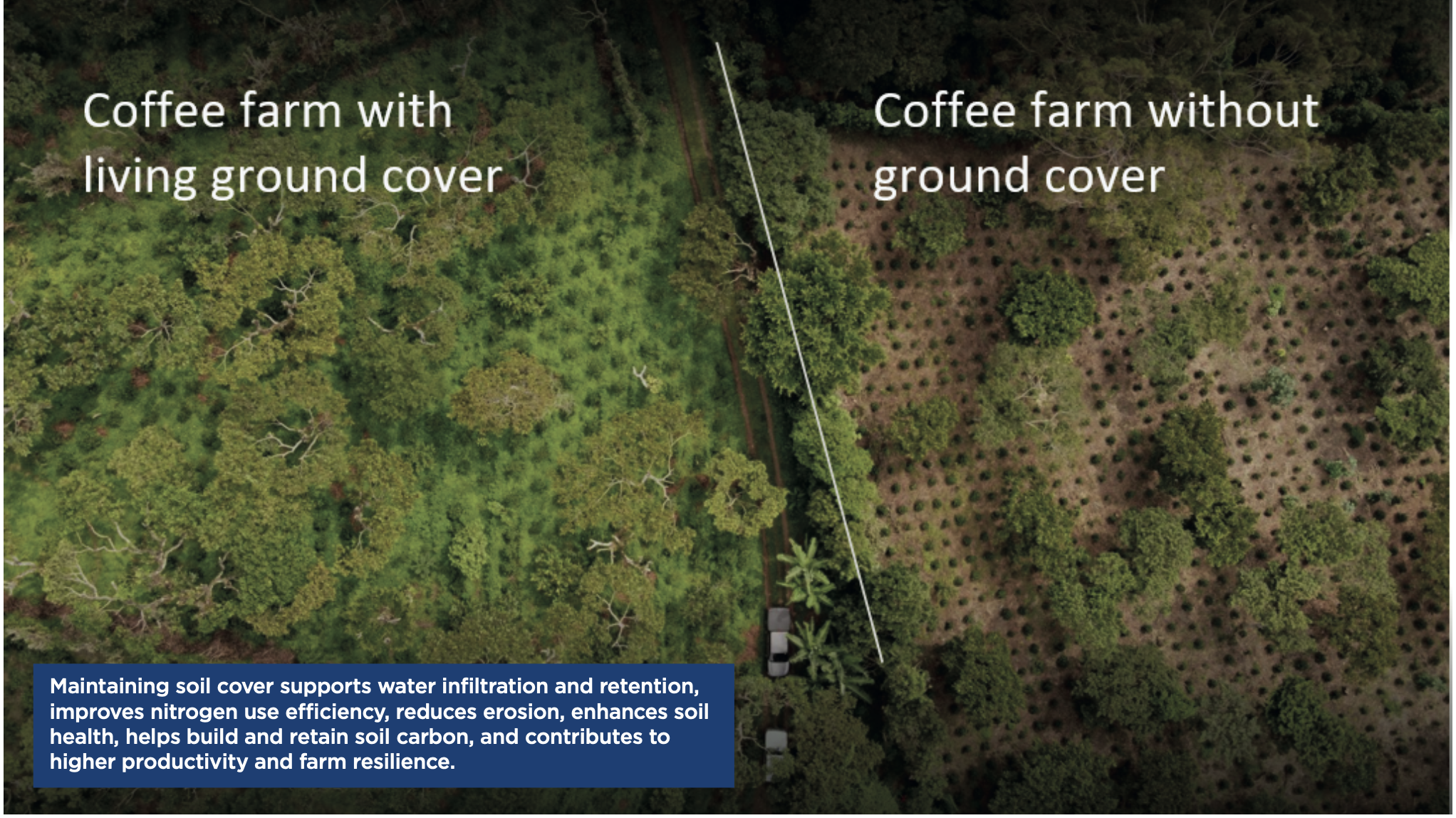
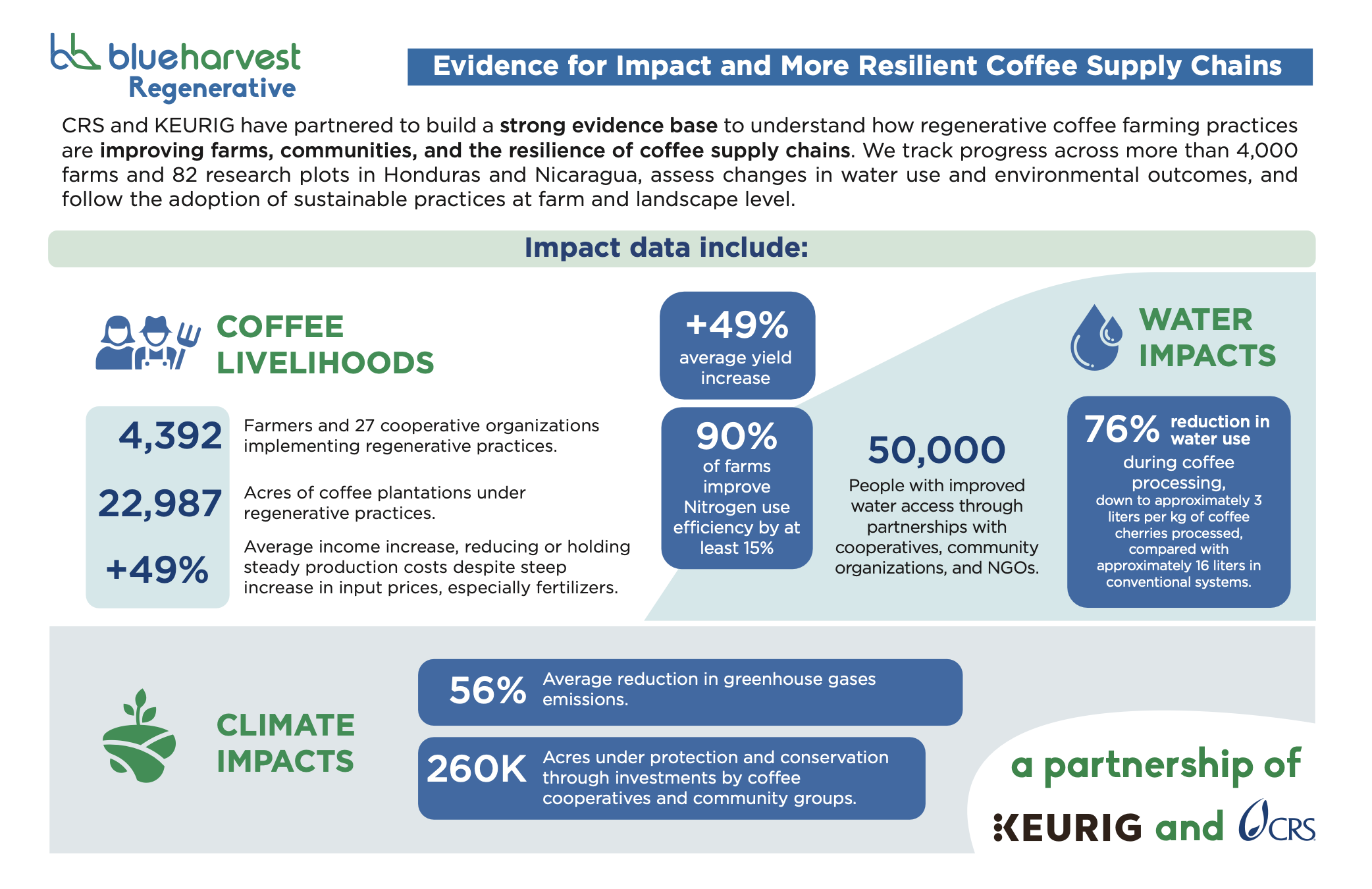
One of the most important questions facing the coffee sector is whether regenerative agriculture can deliver measurable economic value. The evidence emerging from Blue Harvest suggests it can. Participating farms reported an average yield increase of 49%, income gains ranging from 43% to 52%, and significant improvements in nitrogen use efficiency. These results suggest that healthier soils can support stronger farm economics while reducing reliance on costly external inputs, creating value for producers, cooperatives and supply chain partners alike.
Water Security Is Coffee Security
Water is one of the most critical resources underpinning the future of coffee. Coffee processing water use has been reduced by 76%, saving more than 40 million liters of water annually. At the same time, partnerships among cooperatives, communities, and local organizations have helped improve water access for 50,000 people. These results show that investments in water stewardship can generate benefits that extend beyond the farm, supporting both community well-being and long-term supply chain resilience.
A Climate Solution Rooted in Working Landscapes
Using the Cool Farm Tool, Blue Harvest Regenerative has documented greenhouse gas emission reductions of more than 50% through improved nutrient management, agroforestry systems, enhanced soil cover, and better management of coffee processing byproducts and wastewater. At the same time, coffee cooperatives and community groups are helping protect and conserve more than 260,000 acres of critical landscapes. Together, these results show that regenerative approaches can deliver climate benefits while supporting productive coffee landscapes.
A Shared Opportunity for the Coffee Sector
The experiences emerging from Honduras and Nicaragua suggest that productivity, environmental stewardship, and economic opportunity are not competing goals, but are essential parts of a resilient whole. When producers, cooperatives, companies, and communities work together, these outcomes reinforce one another. As the coffee sector looks ahead, regenerative agriculture offers a pathway toward stronger farms, healthier watersheds, lower emissions, and more resilient supply chains. Across Central America, producers are showing that resilience is not only a response to climate challenges—it is an opportunity to build a stronger future for coffee.
Original source:
https://coffeelands.crs.org/?p=10886&preview=true